


Preparing for Your First Anxiety Therapy Session: Questions to Ask and Goals to Consider
Preparing for Your First Anxiety Therapy Session: Questions to Ask and Goals to Consider
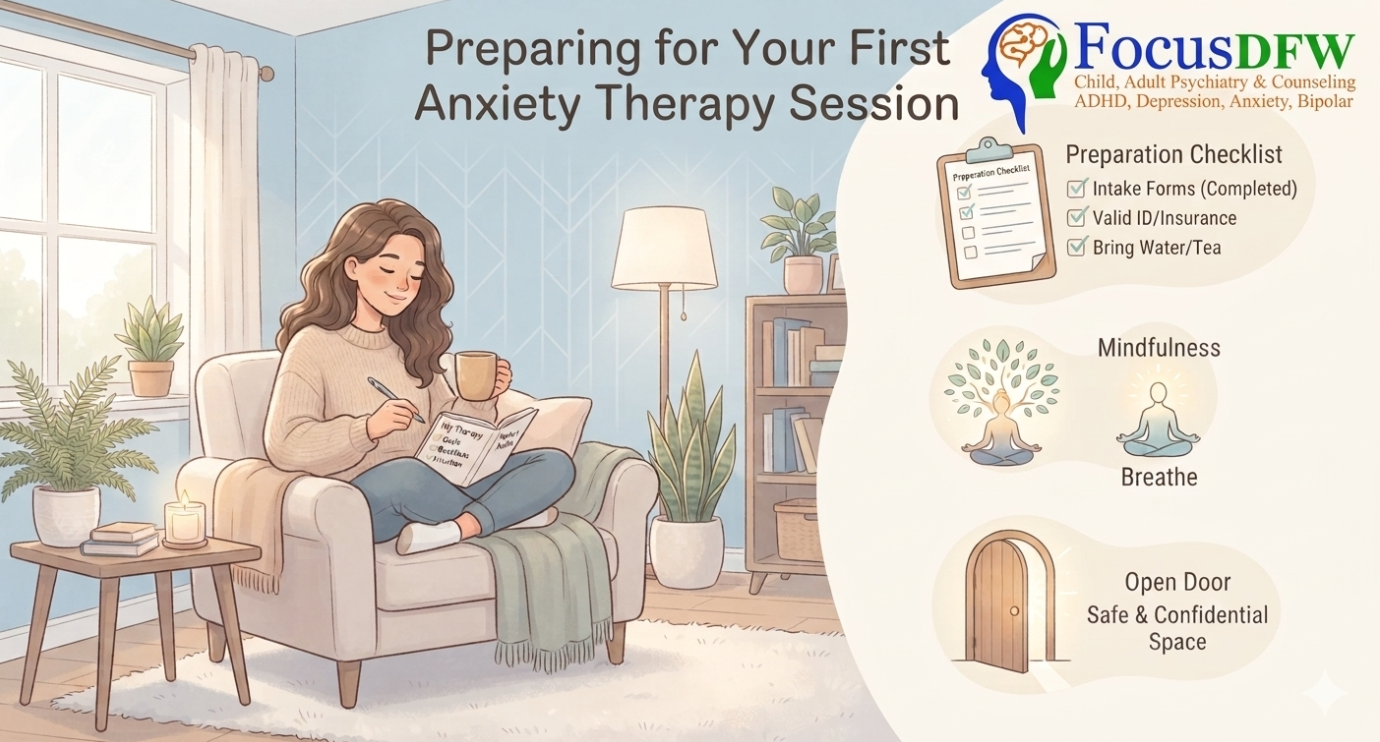
Understanding What to Expect From Your First Anxiety Therapy Session
Taking the first step toward anxiety therapy can feel both encouraging and overwhelming. You may be looking forward to finding relief while also wondering what you should say, how the session will unfold, or whether therapy will genuinely help you feel better. These questions are completely normal, especially if you have never spoken with a mental health professional before. Your first session is an opportunity to understand your experiences, discuss your concerns, and begin exploring strategies that support your emotional well-being. Rather than expecting yourself to explain everything perfectly, focus on being open about what you have been experiencing and what you hope to change. At Focus DFW, we understand that beginning therapy is a personal decision, and we believe that feeling informed and prepared can make the process more comfortable and productive.
Why Preparing for Anxiety Therapy Can Make a Difference
You do not need to prepare an elaborate explanation of your anxiety before meeting with a therapist, but spending some time reflecting on your experiences can help you communicate more clearly. Anxiety can affect different areas of life, including work, relationships, sleep, physical health, and everyday decision-making. Sometimes, its symptoms develop gradually, making it difficult to identify when the problem first started or what causes it to intensify. Thinking about the situations in which you feel anxious can help your therapist understand the patterns affecting your daily life. You might also consider how you typically respond to stress, what you do to feel better, and whether those strategies provide lasting relief. This preparation creates a useful starting point for your first conversation without requiring you to have all the answers.
Recognising the Signs and Symptoms of Your Anxiety
Before your first appointment, consider how anxiety affects you emotionally, physically, and mentally. Emotional symptoms may include persistent worry, irritability, fear, restlessness, or a feeling that something bad is about to happen. Physical symptoms can include a racing heart, muscle tension, sweating, headaches, stomach discomfort, or difficulty sleeping. You may also notice that your thoughts become repetitive, making it difficult to concentrate, relax, or make decisions. Some people experience anxiety primarily in social situations, while others struggle with uncertainty, health concerns, work responsibilities, or specific fears. Describing your symptoms as accurately as possible can help your therapist understand your experience and determine which therapeutic approaches may be appropriate.
Identifying When Your Anxiety Started
Understanding the timeline of your anxiety can provide valuable context during your first therapy session. Try to remember when you first noticed persistent worry, physical tension, avoidance, or changes in your ability to manage everyday responsibilities. For some people, anxiety becomes noticeable after a stressful life event, a significant transition, or a difficult personal experience. For others, it develops gradually without one obvious cause, making it harder to identify a specific starting point. You can also reflect on whether your anxiety has become more frequent, more intense, or more disruptive over time. If you cannot remember exactly when everything began, that is perfectly acceptable because your therapist can help you explore your experiences gradually.
Questions to Ask Your Therapist During the First Session
Your first appointment is not only an opportunity for your therapist to learn about you but also a chance for you to understand how the therapeutic process works. Asking questions can help you feel more confident about the support you are considering and clarify what you can expect from future sessions. You may want to understand your therapist's experience with anxiety, the approaches they use, and how they typically structure treatment. It can also be helpful to discuss how progress is evaluated and what happens when symptoms become difficult to manage between appointments. You should feel comfortable asking for clarification whenever something is unfamiliar or confusing. A productive therapeutic relationship involves open communication, mutual respect, and a shared understanding of your needs.
Asking About Your Therapist's Approach to Anxiety Treatment
Anxiety therapy can involve several evidence-based approaches, and understanding your therapist's preferred methods can help you decide whether their approach suits your needs. Cognitive behavioural therapy, commonly known as CBT, focuses on identifying unhelpful thought patterns and developing more balanced responses to challenging situations.
Exposure-based approaches may help people gradually confront feared situations or experiences in a structured and supportive manner. Acceptance and commitment therapy may focus on developing psychological flexibility and taking meaningful action even when uncomfortable thoughts or feelings arise. Your therapist may also incorporate mindfulness, relaxation techniques, or other strategies depending on your circumstances and treatment goals. Consider asking how these approaches might apply to your particular symptoms, what participation involves, and how your treatment plan may evolve as you make progress.
Understanding What Happens During a Typical Therapy Session
Knowing what a typical session involves can make your first appointment feel less intimidating. Many initial sessions focus on understanding your concerns, discussing your personal background, reviewing relevant experiences, and identifying the difficulties you would most like to address. Your therapist may ask about your symptoms, relationships, daily routines, coping strategies, and previous experiences with mental health support. You may also discuss what you expect from therapy and any concerns you have about the process itself. Later sessions may involve exploring thought patterns, practising coping strategies, discussing challenging situations, and reviewing progress toward your goals. Although sessions often follow a general structure, the process should remain flexible enough to accommodate your needs, comfort level, and changing circumstances.
Discussing Confidentiality and Your Privacy
Feeling safe enough to speak openly is an important part of the therapeutic relationship. Before discussing deeply personal experiences, it is reasonable to ask how your information is protected and what confidentiality means in your therapist's practice. Your therapist should explain the applicable privacy requirements, how records are handled, and the circumstances in which information may need to be disclosed. Depending on the setting and applicable law, exceptions can include certain safety concerns, suspected abuse that must be reported, or other legally required disclosures. If you are attending online therapy, you may also want to understand how the provider protects communications and what you can do to maintain privacy during appointments. Clarifying these details early can help you make an informed decision about the support you receive and feel more comfortable participating honestly.
Considering the Goals You Want to Achieve Through Therapy
One of the most useful things you can do before your first appointment is consider what you want your life to look like if anxiety becomes more manageable. Your goals do not need to be ambitious or perfectly defined because even small improvements can have a meaningful effect on your daily experience. You might want to sleep more consistently, feel more comfortable in social situations, reduce excessive worrying, or make decisions without repeatedly questioning yourself. Perhaps anxiety prevents you from attending events, speaking up at work, travelling independently, or enjoying activities that previously brought you happiness. Identifying these challenges helps your therapist understand what improvement would mean in practical terms. At Focus DFW, we encourage people to approach therapy with realistic expectations and a willingness to recognise progress in both small and significant changes.
Setting Realistic and Measurable Therapy Goals
Effective therapy goals are easier to evaluate when they describe specific changes rather than vague expectations. For example, instead of simply wanting to feel less anxious, you might aim to manage anxious thoughts more effectively during work meetings or reduce avoidance of situations that matter to you. Your therapist can help you turn broad intentions into achievable steps that reflect your current circumstances and personal priorities. It may also be useful to identify how you will recognise progress, such as recovering more quickly after stressful situations or spending less time caught in repetitive worry. Goals should remain flexible because your understanding of anxiety may develop as therapy continues. Progress does not necessarily mean eliminating every anxious feeling, but it can mean responding to anxiety with greater confidence, flexibility, and self-awareness.
Exploring the Triggers That Make Your Anxiety Worse
Anxiety often intensifies in response to particular situations, thoughts, physical sensations, or environmental pressures. You may notice that uncertainty, conflict, deadlines, financial concerns, health worries, or social expectations contribute to increased distress. Some triggers are easy to recognise, while others become apparent only after observing patterns over time. Before your appointment, think about recent situations in which your anxiety increased and what was happening immediately beforehand. Consider the thoughts that crossed your mind, the physical sensations you experienced, and the actions you took in response. Sharing these observations with your therapist can help you identify recurring patterns and develop strategies for responding to challenging situations more effectively.
Understanding the Difference Between Anxiety and Everyday Stress
Stress and anxiety can feel similar, but understanding how they affect you may help guide your treatment conversations. Stress is often associated with an identifiable demand or challenge, such as an approaching deadline, a difficult conversation, or a major responsibility. Anxiety may continue even when the immediate stressor has passed, or it may involve persistent worry about events that have not happened. Both experiences can affect concentration, sleep, mood, and physical comfort, and they can occur together. During your first appointment, your therapist may explore how long your symptoms last, how frequently they occur, and whether they interfere with important areas of your life. This discussion can help clarify your needs and determine whether further assessment is appropriate.
Talking About Your Daily Habits and Coping Strategies
Your everyday habits can influence how you experience and manage anxiety, making them a useful topic for your first session. You may want to discuss your sleep schedule, physical activity, work demands, social connections, and the ways you spend time recovering from stressful days. It can also be helpful to explain what you currently do when anxiety becomes intense, including whether you seek reassurance, avoid certain situations, distract yourself, or repeatedly analyse possible outcomes. Some coping strategies provide immediate comfort but may make anxiety harder to manage over time when they become rigid or encourage avoidance. Your therapist can help you examine these patterns without judgement and identify alternatives that better support your long-term well-being. You do not need to change all your habits before therapy begins because understanding your current routines is the first step toward making sustainable adjustments.
Discussing Previous Experiences With Mental Health Support
If you have attended therapy before, discussing that experience can help your new therapist understand what has and has not worked for you. You might explain which strategies you found useful, what made previous sessions difficult, or why you decided to stop attending. If you have never received mental health support, you can share any concerns you have about discussing personal matters or trying unfamiliar techniques. Your therapist may also ask whether you have previously received an anxiety-related diagnosis or used medication as part of your care. Sharing relevant information can support a more informed treatment plan, although you can ask questions whenever you are uncertain about what information is necessary. Your previous experiences, whether positive, negative, or limited, can help shape a more appropriate approach to your current needs.
Addressing Anxiety About Attending Therapy
It may seem contradictory to feel anxious about attending therapy for anxiety, but this experience is more common than many people realise. You might worry about being judged, struggling to explain your feelings, becoming emotional, or discovering something uncomfortable about yourself. You may also wonder whether your concerns are serious enough to justify seeking professional support. These worries do not mean that therapy is unsuitable for you, and you do not have to eliminate them before scheduling an appointment. Consider telling your therapist that you feel nervous about the process because this information can help them understand your comfort level and adjust the pace of the conversation. A supportive therapeutic environment should allow you to ask questions, express uncertainty, and gradually explore difficult subjects without feeling pressured to disclose everything immediately.
Knowing What to Do If You Become Emotional During a Session
Talking about anxiety can bring up emotions that have been difficult to express or understand on your own. You might become tearful, feel frustrated, struggle to find the right words, or need a moment to organise your thoughts. These reactions are not evidence that you are failing at therapy, and you do not need to apologise for having an emotional response. If you feel overwhelmed, you can tell your therapist that you need a pause, a slower pace, or a moment to gather yourself. Your therapist can work with you to help the conversation remain manageable and determine when it is appropriate to explore a topic more deeply. Remember that therapy is a process rather than a performance, so your willingness to participate honestly matters more than presenting your experiences in a polished or organised way.
Preparing for Online Anxiety Therapy
Online therapy can make mental health support more accessible, particularly when travelling to appointments creates additional stress or scheduling difficulties. Before your first virtual session, choose a private space where you can speak comfortably without unnecessary interruptions. Check your internet connection, camera, microphone, and device settings in advance so that technical problems are less likely to disrupt the conversation. Keep water nearby and consider having a notebook available if you would like to record questions or useful observations. It can also be helpful to inform people in your household that you need uninterrupted time for your appointment. If you are unsure how online therapy works or whether it suits your circumstances, ask your provider about the format, privacy arrangements, and any practical requirements before the session begins.
Understanding How Progress Will Be Measured
Progress in anxiety therapy can occur gradually, and it may not always be obvious from one session to the next. You might initially notice that you recognise anxious thoughts sooner, recover more quickly from stressful situations, or understand your emotional responses more clearly. Over time, you may also become more willing to participate in activities that previously felt difficult or uncertain. Your therapist may use questionnaires, symptom tracking, discussions about daily functioning, or other assessment methods to evaluate changes. Asking how progress will be reviewed can help you understand what to expect and when your treatment plan might need adjustment. It is also important to discuss setbacks openly because temporary increases in anxiety do not automatically mean that therapy is ineffective.
Asking How to Practise Skills Between Sessions
Therapy often involves applying what you learn during appointments to situations in your everyday life. Depending on your treatment plan, your therapist may suggest observing thought patterns, practising relaxation techniques, recording anxiety triggers, or gradually approaching situations you have been avoiding. These activities can help you develop confidence and discover which strategies are most useful in different circumstances. Before beginning any exercise, make sure you understand its purpose, how to approach it safely, and what to do if it feels too difficult. You can also ask how much time you should spend practising and how to discuss the results during your next session. Consistent practice can support progress, but the activities should remain realistic and appropriate for your individual needs rather than becoming another source of pressure.
Recognising When Your Treatment Plan Needs Adjustment
Anxiety treatment is not always a straightforward process, and different people respond differently to therapeutic approaches. You may find that a particular strategy is helpful in one situation but less effective in another. Sometimes, your goals change as you gain a better understanding of the concerns affecting your life. If you feel that sessions are not addressing your priorities or that an exercise is too challenging, discuss these concerns with your therapist. Open communication can help you and your therapist evaluate what is working, identify obstacles, and consider appropriate adjustments. A treatment plan should support meaningful improvement while respecting your circumstances, preferences, and pace of progress.
Creating a Comfortable Environment for Your First Appointment
A little practical preparation can make your first therapy session easier to navigate. Consider scheduling your appointment at a time when you are unlikely to feel rushed by work, family responsibilities, or other commitments. If possible, allow yourself a few minutes beforehand to settle in, review your main concerns, and take a few comfortable, steady breaths. You may find it useful to write down two or three topics you would like to discuss, particularly if you tend to forget important details when you feel nervous. After the session, leave some time to reflect on what you learned and how you felt about the interaction. These simple steps can help you approach the experience with greater intention without turning preparation into another task that must be completed perfectly.
What to Expect After Your First Anxiety Therapy Session
After your first appointment, you may feel relieved, hopeful, thoughtful, or emotionally tired, and any of these responses can be understandable. Discussing personal experiences requires attention and emotional effort, so give yourself time to process the conversation rather than expecting immediate clarity about everything. You might reflect on whether you felt heard, whether the therapist explained the process clearly, and whether you understand the next steps. It can also be helpful to consider which concerns you would like to explore in greater detail during future appointments. You are not expected to solve your anxiety after one session, and meaningful progress often involves continued assessment, practice, and collaboration. If questions arise afterward, you can ask your therapist how to communicate between appointments and what to do if your symptoms become more difficult to manage.
Finding the Right Therapeutic Fit
A strong therapeutic relationship is built on trust, respect, clear communication, and a shared commitment to your well-being. You should feel that your therapist listens carefully, takes your concerns seriously, and explains treatment options in a way you can understand. It is also reasonable to expect professional boundaries, respect for your privacy, and a willingness to discuss your questions about treatment. You may not feel completely comfortable during the first meeting because discussing anxiety can naturally involve uncertainty and vulnerability. However, you should generally feel that your therapist is approaching your concerns with care and that you can communicate honestly without being dismissed. If you remain uncertain about the fit after discussing your concerns, you can consider whether another provider or therapeutic approach might better meet your needs.
Taking the First Step Toward Managing Anxiety
Preparing for your first anxiety therapy session is ultimately about giving yourself an opportunity to begin with greater understanding and confidence. You do not need to identify every trigger, establish every goal, or find the perfect words before you attend your appointment. Start by considering how anxiety affects your daily life, what you hope to change, and which questions would help you understand the therapeutic process. From there, your therapist can help you explore your experiences, develop realistic goals, and identify strategies suited to your circumstances. At Focus DFW, we recognise that seeking support can require courage, particularly when anxiety makes unfamiliar experiences feel difficult. With appropriate professional guidance, patience, and consistent effort, therapy can help you develop healthier responses to anxiety and build greater confidence in navigating everyday challenges.
Begin Your Anxiety Therapy Journey With Greater Confidence
You deserve support that takes your experiences seriously and helps you work toward meaningful improvements in your daily life. Whether you are struggling with persistent worry, physical tension, social fears, or difficulty managing uncertainty, your first therapy session can provide an opportunity to explore your concerns in a supportive setting. Asking questions, communicating your priorities, and discussing your expectations can help establish a strong foundation for treatment. Remember that progress may involve gradual changes in how you understand anxiety, respond to difficult thoughts, and participate in activities that matter to you. If anxiety is affecting your relationships, work, sleep, or overall quality of life, consider reaching out to a qualified mental health professional to discuss your options. Focus DFW encourages you to approach this first step with patience and an open mind, recognising that seeking help is a constructive investment in your emotional well-being.