Depression Treatment Dallas: Rebuilding Daily Function Through Structured Care Pathways
Depression Treatment Dallas
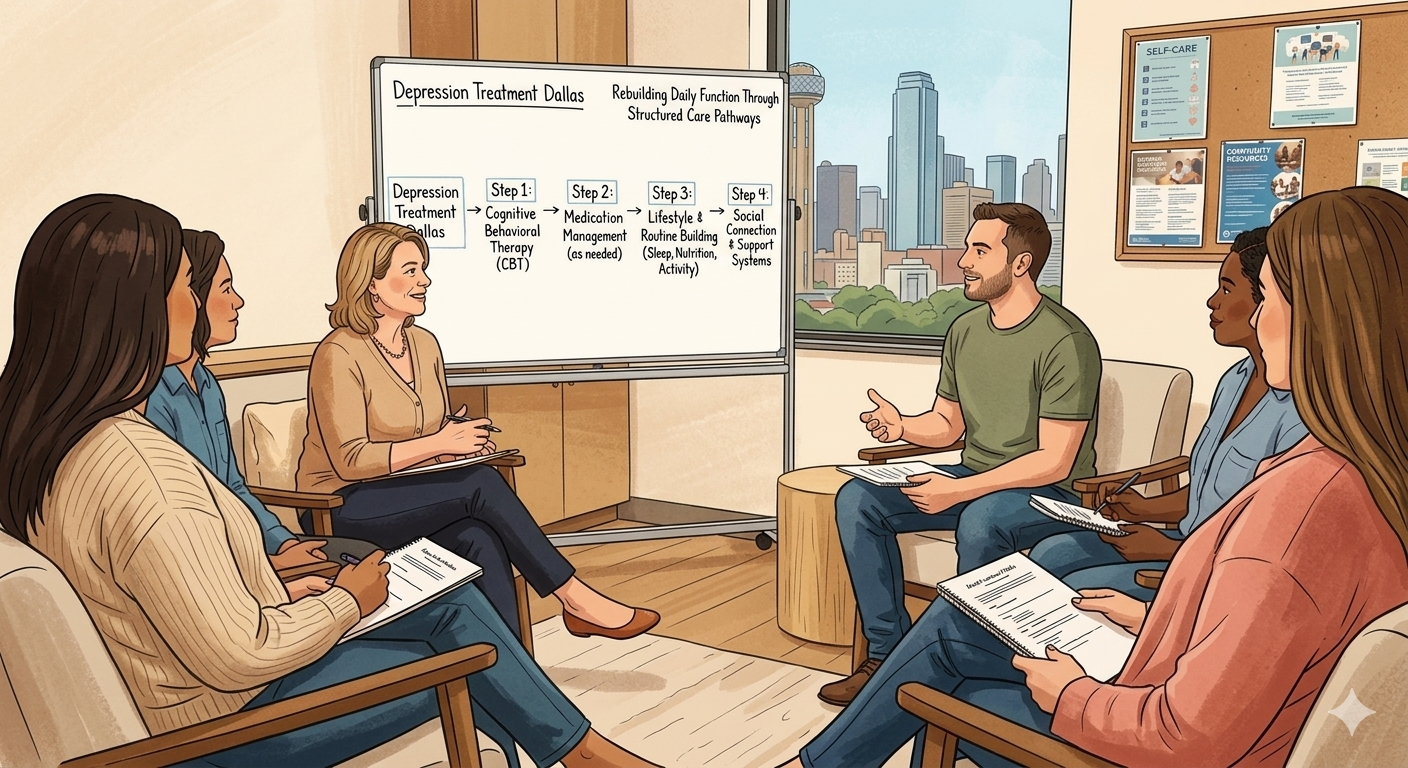
In a city as dynamic as Dallas, mental health challenges often remain hidden beneath high performance expectations, professional ambition, and constant social engagement. Depression is not always expressed through visible withdrawal or sadness. It frequently appears as reduced productivity, emotional fatigue, disrupted routines, and an inability to sustain engagement with daily responsibilities. At FocusDFW, we approach depression treatment as a process of restoring functional stability, not simply alleviating symptoms.
Moving Beyond Symptom Relief Toward Functional Recovery
Traditional discussions around depression often center on emotional distress. While this is valid, it only captures part of the condition. Depression frequently disrupts cognitive processes, decision making, sleep regulation, and interpersonal responsiveness. These disruptions create a cascade effect that impacts both personal and professional life.
Our approach prioritizes functional recovery. This means we work with individuals to rebuild consistency in sleep cycles, restore cognitive clarity, and reestablish engagement with daily tasks. When these foundational elements improve, emotional stability tends to follow in a more sustainable way.
The Role of Environmental Pressures in Urban Mental Health
Dallas presents a unique psychological environment. Fast paced industries, long commutes, and competitive professional landscapes can intensify underlying mental health conditions. Many individuals do not recognize how environmental stressors contribute to their depressive symptoms.
At FocusDFW, we integrate environmental analysis into treatment planning. We examine how work demands, social expectations, and lifestyle patterns influence mental health. This allows us to create targeted interventions that align with the realities of living and working in a high demand urban setting.
Precision Assessment as the Foundation of Care
Effective depression treatment begins with accurate diagnosis. Depression is not a uniform condition. It can present as major depressive disorder, persistent depressive disorder, or be linked to anxiety, trauma, or burnout.
We conduct comprehensive assessments that evaluate:
• Cognitive functioning
• Emotional regulation patterns
• Behavioral habits
• Sleep and biological rhythms
• External stress factors
This multidimensional evaluation allows us to identify the specific mechanisms driving each individual’s experience of depression. Treatment becomes far more effective when it is based on precise clinical insight rather than generalized assumptions.
Structured Therapeutic Modalities
Once assessment is complete, we implement structured therapeutic interventions tailored to the individual. These may include:
1. Cognitive Behavioral Therapy
We focus on identifying distorted thinking patterns and replacing them with adaptive cognitive frameworks. This is particularly effective for individuals experiencing negative thought loops or reduced self efficacy.
2. Behavioral Activation
Depression often leads to withdrawal from activities that once provided meaning. We systematically reintroduce these activities in a controlled and measurable way to rebuild engagement and motivation.
3. Psychodynamic Exploration
For individuals whose depression is rooted in unresolved emotional experiences, deeper therapeutic work helps uncover and process underlying conflicts.
4. Medication Management
When clinically appropriate, medication can stabilize neurochemical imbalances. Our approach ensures that pharmacological support is integrated carefully with therapy rather than used as a standalone solution.
Rebuilding Cognitive and Emotional Resilience
One of the less discussed aspects of depression is its impact on cognitive endurance. Individuals often struggle with focus, memory, and decision making. This can create a cycle where reduced performance leads to increased stress, which further deepens depressive symptoms.
We incorporate cognitive restructuring exercises and attention training techniques to rebuild mental stamina. Over time, this enhances an individual’s ability to manage complex tasks and maintain consistent productivity.
Social Reintegration as a Therapeutic Goal
Depression frequently isolates individuals from their social networks. This isolation reinforces feelings of disconnection and low self worth. Treatment must therefore include strategies for social reintegration.
At FocusDFW, we guide individuals in rebuilding communication skills, setting healthy interpersonal boundaries, and re engaging with supportive relationships. Social stability plays a critical role in long term recovery.
Measuring Progress Through Functional Metrics
Rather than relying solely on subjective emotional reporting, we track progress using functional indicators such as:
• Consistency in daily routines
• Improved sleep quality
• Increased task completion rates
• Enhanced interpersonal interaction
• Reduced cognitive fatigue
These measurable outcomes provide a clearer picture of recovery and help maintain accountability throughout the treatment process.
Long Term Maintenance and Relapse Prevention
Depression treatment does not end when symptoms improve. Without proper maintenance strategies, individuals remain vulnerable to relapse, especially in high pressure environments.
We develop long term care plans that include:
• Stress management protocols
• Routine mental health check ins
• Adaptive coping strategies
• Lifestyle optimization techniques
This ensures that progress is sustained even as life circumstances evolve.
A Systematic Approach to Mental Health Care
At FocusDFW, we view depression treatment as a structured, data informed process. Our goal is not only to help individuals feel better but to enable them to function effectively, think clearly, and engage fully with their lives.
Depression can disrupt every layer of daily experience, but with the right clinical framework, recovery becomes a measurable and achievable outcome. By focusing on functional restoration, environmental alignment, and long term resilience, we provide a pathway that supports both immediate improvement and lasting mental stability.