
How Digital Burnout is Impacting Mental Health in Dallas Professionals
How Digital Burnout is Impacting Mental Health in Dallas Professionals
The Dallas skyline is a testament to the relentless ambition that drives our city. From the bustling corridors of the West End to the high stakes boardrooms in Plano, Dallas professionals are known for their grit and "always on" work ethic. However, this dedication is increasingly coming at a significant cost. As we navigate a world where the line between office hours and personal time has all but vanished, we are seeing a dramatic rise in digital burnout.
At Focus DFW, we believe it is time to address how this hyper connected lifestyle is reshaping the
mental health landscape of our professional community.
The Reality of the Digital Grind
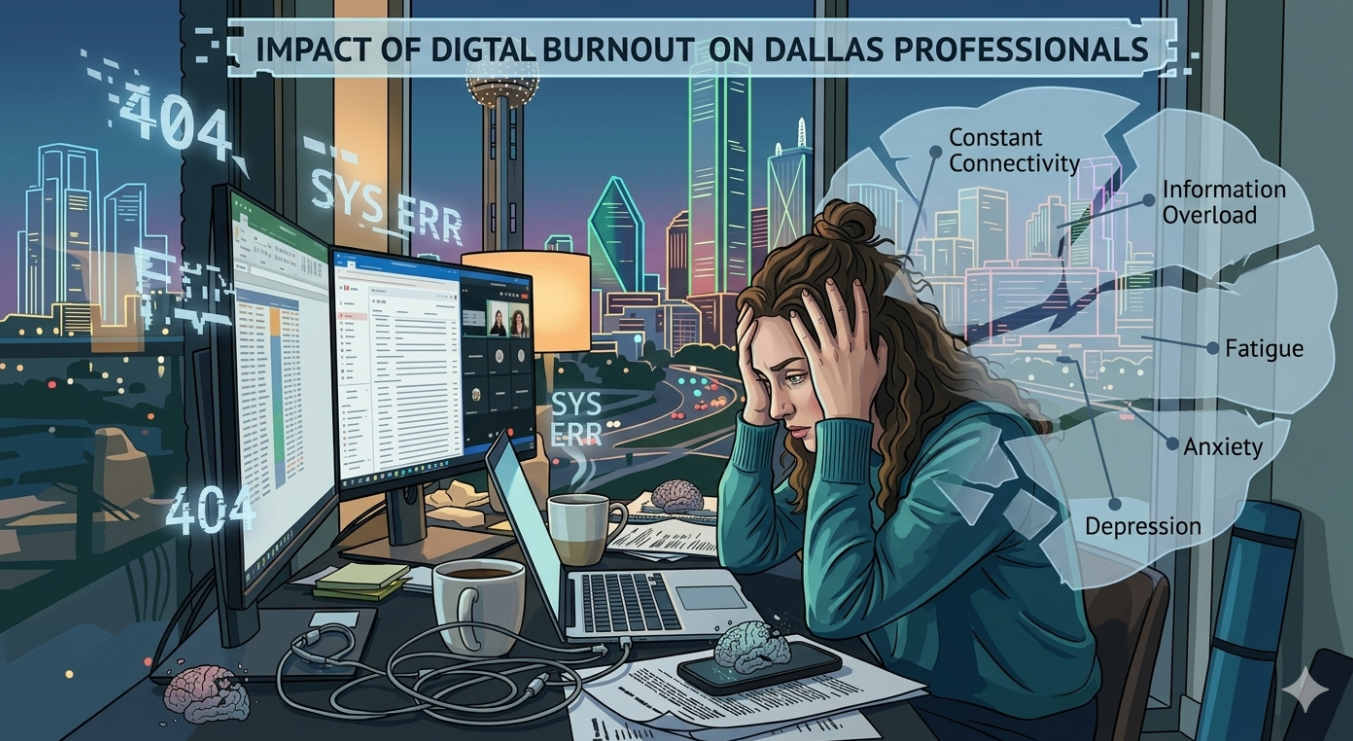
Digital burnout is more than just feeling tired after a long day of Zoom calls. It is a state of physical, emotional, and
mental exhaustion caused by prolonged exposure to digital tools and the constant pressure to remain accessible. In Dallas, where many of us work in high pressure sectors like tech, finance, and telecommunications, the expectation to respond to an email at 9 PM or a Slack message on a Saturday has become the standard.
When we tether ourselves to our devices, we deprive our brains of the essential "down time" needed to recover from daily stressors. This constant state of high alert triggers a cortisol response that, over time, erodes our resilience and leaves us feeling perpetually drained.
The Mental Health Toll on Our Community
The impact of this digital saturation is not just anecdotal. We are observing several critical trends among Dallas professionals that point directly toward a
mental health crisis fueled by technology.
• Heightened Anxiety and Hypervigilance: The "ping" of a notification can trigger a genuine stress response. Many of us now experience phantom vibration syndrome or a sense of dread when looking at our phones, fearing the next urgent request or fire that needs to be extinguished.
• The Erosion of Work Life Boundaries:
Digital burnout blurs the boundaries that protect our personal lives. When the office exists inside our pockets, we never truly "leave" work. This leads to strained relationships with family and friends as our presence is often compromised by the lure of the screen.
• Decreased Cognitive Function:
Ironically, the tools meant to make us more productive are often doing the opposite. Constant multitasking and digital interruptions fragment our attention. We find it harder to engage in deep work, leading to feelings of inadequacy and professional frustration.
•
Disrupted Sleep Patterns:
The blue light from our screens is a known enemy of melatonin production, but the
mental stimulation of late night scrolling is equally damaging. We are seeing a rise in insomnia among local professionals who simply cannot "switch off" their brains at night.
Navigating the Way Forward
As a community, we must acknowledge that our current pace is unsustainable. Reclaiming our mental health requires a collective shift in how we view digital productivity. At Focus DFW, we advocate for intentional boundaries that allow us to excel professionally without sacrificing our well being.
This starts with individual agency. We can choose to implement "no screen" zones during dinner or dedicate the first hour of our mornings to offline activities. However, the responsibility also lies with our local corporate culture. We need leaders who respect "right to disconnect" principles and who model
healthy digital habits for their teams.
Reconnecting with the Big D
One of the best remedies for digital burnout is right outside our windows. We encourage Dallas professionals to step away from the monitors and reconnect with the physical world. Whether it is a walk through Klyde Warren Park, a visit to the Dallas Museum of Art, or simply a quiet afternoon in one of our many local coffee shops without a laptop, these moments of digital detox are vital.
The strength of Dallas has always been its people. By addressing digital burnout head on, we ensure that our professional community remains not only productive but truly healthy and resilient for years to come. Our mental health is the foundation of our success, and it is time we started treating it with the priority it deserves.