Understanding Teen Mental Health in Dallas: Warning Signs Every Parent Should Know
Understanding Teen Mental Health in Dallas
Raising a teenager in a fast-paced metropolitan area like Dallas-Fort Worth brings a unique set of joys and challenges. As our city continues to grow, so do the pressures on our youth. From the competitive academic environments in our local school districts to the constant connectivity of social media, Dallas teens are navigating a complex landscape. At Focus DFW, we believe that staying informed is the first step in supporting the next generation.
While adolescence is naturally a period of transition and mood swings, it is essential for parents to distinguish between typical teenage behavior and potential mental health concerns. Identifying these signs early can make a profound difference in a child’s long-term well-being.
The Landscape for Dallas Teens
Our community offers incredible opportunities, but we also recognize the stressors that come with life in a major hub. The pressure to excel in sports, maintain a perfect digital presence, and keep up with rigorous coursework can take a toll. We are seeing an increase in anxiety and depressive symptoms among local youth, making it more important than ever for our families to be vigilant.
Key Warning Signs to Watch For
It is easy to dismiss certain behaviors as just being a teenager. However, we encourage parents to look for patterns rather than isolated incidents. Here are several indicators that your teen might be struggling with their mental health.
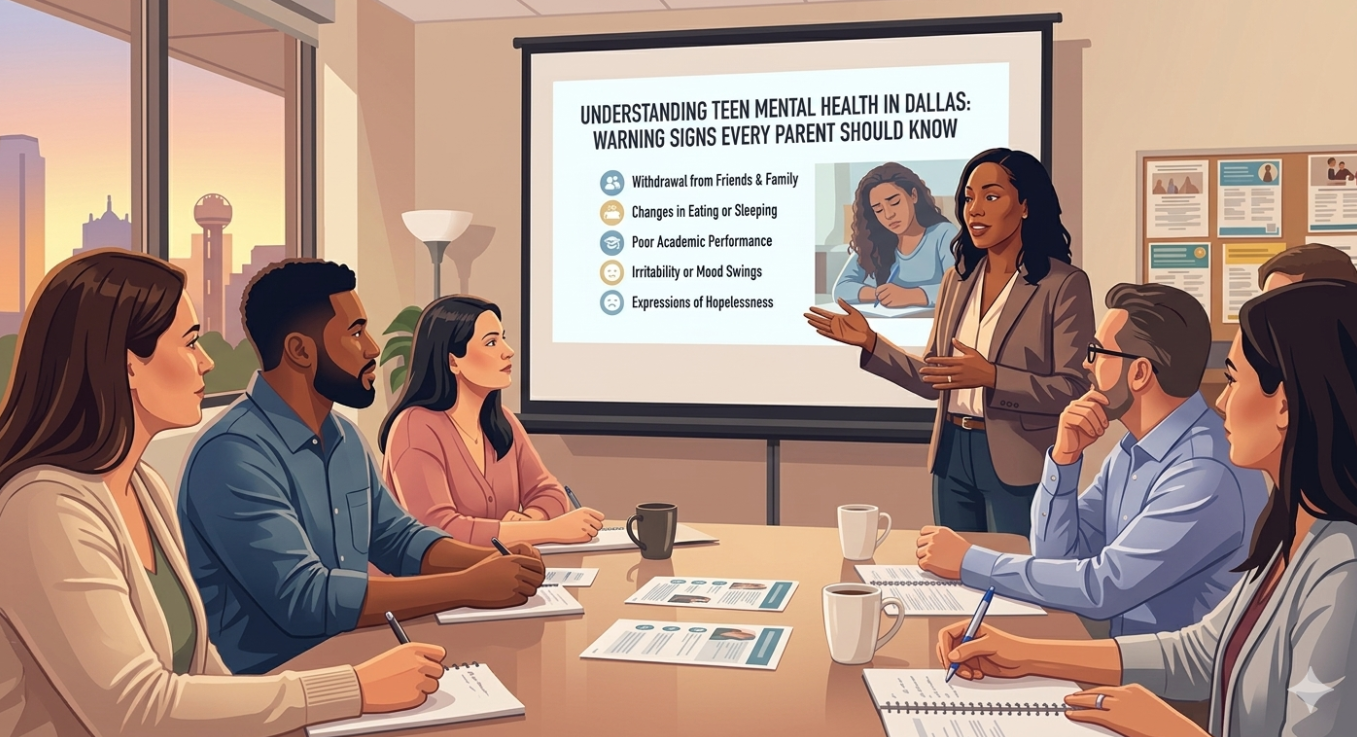
Significant Changes in Sleep and Eating Habits
If you notice your teen is suddenly sleeping all day or, conversely, struggling with insomnia, it may be a red flag. Similarly, drastic changes in appetite or weight can signal underlying emotional distress. While a growth spurt might explain an extra snack, a total loss of interest in food or secretive eating habits deserves your attention.
Withdrawal from Social Circles and Hobbies
One of the most telling signs is a sudden lack of interest in activities they once loved. If your teen stops wanting to hang out with their longtime friends or quits a sports team they were passionate about, we should take notice. Social withdrawal often manifests as spending excessive time alone in their room or avoiding family interactions entirely.
Declining Academic Performance
While every student has a bad week, a consistent and sharp drop in grades is often a symptom of something deeper. Difficulty concentrating, lack of motivation, or school avoidance can all be tied to mental health challenges like depression or anxiety. We suggest reaching out to teachers or counselors if you see a persistent downward trend.
Heightened Irritability and Emotional Outbursts
Teenage hormones certainly play a role in moodiness, but extreme irritability or uncharacteristic anger can be an external expression of internal pain. If our teens are reacting with intense hostility to minor situations, it might be their way of signaling that they are overwhelmed.
Physical Ailments Without a Clear Cause
Sometimes, mental health struggles manifest physically. If your teen frequently complains of headaches, stomachaches, or general fatigue, and a doctor has ruled out physical illness, these may be psychosomatic symptoms of stress or anxiety.
How We Can Support Our Teens
If you recognize these signs in your child, the first step is to open a non-judgmental line of communication. We recommend approaching these conversations with empathy rather than criticism. Simply stating that you have noticed they seem unhappy and asking how you can help can go a long way.
In Dallas, we are fortunate to have access to a wide range of professionals and resources. Seeking the guidance of a licensed therapist or a mental health professional is a proactive and healthy choice for any family. At Focus DFW, our goal is to foster a community where mental health is prioritized and where every teen feels seen and supported.
By staying observant and acting with compassion, we can help our teenagers navigate these formative years and build the resilience they need for a healthy future. Focus on the signs, listen to their needs, and remember that you do not have to walk this path alone.