
The ADHD Burnout Cycle: Why Rest Alone Does Not Always Fix Exhaustion
The ADHD Burnout Cycle: Why Rest Alone Does Not Always Fix Exhaustion
Understanding Why ADHD Exhaustion Feels Different
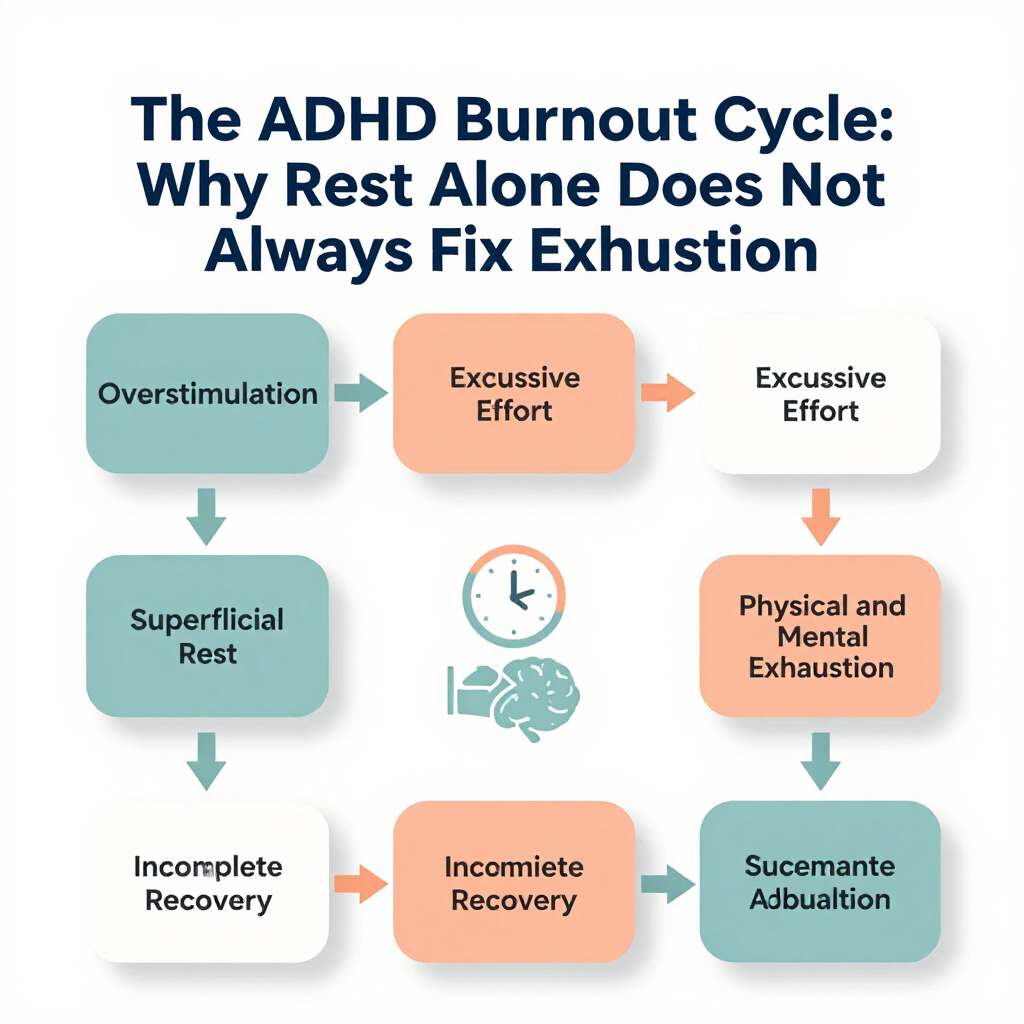
Exhaustion is a common experience for adults with ADHD, but it is often misunderstood as a simple consequence of being busy or not getting enough sleep. Many people assume that taking a weekend off, sleeping longer, or stepping away from responsibilities should automatically restore their energy. While rest is important, ADHD-related burnout can involve much deeper patterns that are not resolved through physical rest alone. The exhaustion may develop after weeks, months, or even years of constantly trying to compensate for difficulties with focus, organization, time management, emotional regulation, and executive functioning. Someone may appear productive and successful from the outside while privately using an enormous amount of mental energy just to keep up with ordinary expectations. This continuous effort can eventually create a cycle in which periods of intense productivity are followed by severe exhaustion, withdrawal, and difficulty functioning.
ADHD burnout is not simply about feeling tired after a demanding week. It can involve mental fatigue, emotional depletion, reduced motivation, increased sensitivity to stress, and a noticeable decline in the ability to manage everyday responsibilities. Tasks that once felt manageable may suddenly seem overwhelming, even when they are relatively simple. A person may begin procrastinating more, forgetting important details, struggling to make decisions, or feeling unable to start tasks they genuinely want to complete. These experiences can create frustration and self-criticism, especially when the individual believes they should be able to recover simply by resting. Understanding the difference between ordinary fatigue and the ADHD burnout cycle is an important step toward finding more sustainable ways to support long-term wellbeing.
The Hidden Energy Cost of Constant Compensation
Many adults with ADHD spend a significant portion of their lives developing strategies to compensate for challenges they may not fully understand. They may create elaborate reminder systems, work longer hours than others, repeatedly check their work, or rely on intense pressure to finally activate focus. These strategies can sometimes produce impressive results, but they often come with a substantial energy cost. The person may constantly feel as though they are trying to catch up, prevent mistakes, or avoid disappointing others. Over time, this state of continuous mental effort can become exhausting because the brain rarely receives an opportunity to operate without pressure. Resting physically may provide temporary relief, but it does not necessarily remove the systems and expectations that caused the exhaustion in the first place.
Masking can add another layer to this problem. Adults with ADHD may work hard to appear organized, attentive, calm, and consistently productive even when maintaining that appearance requires significant internal effort. They may suppress restlessness, hide confusion, avoid asking for clarification, or overcommit themselves because they fear being perceived as unreliable. This constant self-monitoring can become mentally draining and contribute to emotional exhaustion. When the person finally reaches a point where they can no longer maintain the same level of performance, burnout may appear suddenly even though the underlying strain has been building for a long time. At FocusDFW, we recognize that addressing exhaustion often requires looking beyond sleep habits and examining the broader patterns that continuously consume mental and emotional energy.
Why Rest Can Feel Helpful but Still Not Be Enough
Taking time away from work and responsibilities can absolutely support recovery, but rest alone may not resolve ADHD burnout when the underlying cycle remains unchanged. A person might sleep for ten hours, spend an entire weekend at home, or take a vacation and still feel exhausted shortly after returning to their normal routine. This can be confusing and discouraging because the individual may conclude that they are somehow failing at resting correctly. In reality, physical rest and psychological recovery are not always the same thing. If someone returns to an environment filled with unrealistic demands, chronic overstimulation, poor boundaries, and constant pressure to compensate for executive functioning challenges, the exhaustion can quickly return. Recovery becomes more sustainable when rest is combined with changes that reduce the ongoing drain on mental resources.
Another reason rest may not fully resolve burnout is that unstructured downtime can sometimes create additional stress for people with ADHD. When external obligations temporarily disappear, individuals may struggle with guilt, unfinished tasks, racing thoughts, or anxiety about everything waiting for them. Instead of feeling restorative, free time can become filled with mental reminders and self-criticism. Some people may also swing between complete inactivity during burnout and intense overexertion once they begin feeling slightly better. This pattern can prevent the nervous system from establishing a consistent rhythm of recovery. Sustainable improvement often requires learning how to balance activity, stimulation, responsibility, and recovery rather than moving repeatedly between extremes.
The Productivity and Collapse Pattern
One of the most difficult aspects of ADHD burnout is the cycle between periods of intense productivity and periods of complete depletion. Many people with ADHD are capable of extraordinary focus when a task feels urgent, interesting, novel, or emotionally significant. During these periods, they may work for long stretches, neglect breaks, forget meals, and push through fatigue because their attention is fully activated. The productivity can feel rewarding and may even reinforce the belief that working intensely is the best way to accomplish important goals. However, sustained hyperfocus without adequate regulation can create a significant energy deficit. Eventually, the individual may experience a crash that makes it difficult to concentrate, initiate tasks, or maintain the same level of engagement.
The problem is that the crash is often interpreted as laziness or a lack of discipline rather than a signal that the previous pace was unsustainable. The person may respond by applying even more pressure to themselves, promising to become more organized or work harder the next time. This creates another period of overcompensation, followed by another collapse. Over time, the cycle can damage confidence and create a complicated relationship with productivity. Individuals may begin believing that they are either highly capable or completely incapable, depending on their current energy level. Breaking this pattern requires a more realistic understanding of energy management and a willingness to value consistency over short bursts of extreme output.
Emotional Exhaustion Plays a Major Role
ADHD burnout is not exclusively cognitive or physical because emotional regulation can also require considerable energy. Many individuals with ADHD experience emotions intensely and may spend significant time processing frustration, rejection, disappointment, anxiety, or interpersonal misunderstandings. Everyday situations that appear minor to others can create a strong internal emotional response. Managing these reactions while continuing to meet work, family, and social expectations can gradually become exhausting. The emotional load may be especially heavy for people who have spent years receiving criticism about forgetfulness, lateness, distractibility, or inconsistent performance. Even after external criticism decreases, internal self-criticism can continue consuming energy.
This emotional exhaustion can make rest less effective because the mind may remain highly active even when the body is physically inactive. Someone can spend an entire day on the couch while continuing to worry about responsibilities, replay conversations, or feel guilty about not being productive. The nervous system does not necessarily experience true recovery when the mind remains in a state of perceived threat or pressure. Learning to recognize emotional overload can therefore be just as important as identifying physical fatigue. Recovery may involve developing healthier ways to process emotions, establish boundaries, and reduce the constant internal demand to prove one's competence. When emotional strain is addressed alongside practical challenges, people may find that rest becomes more restorative.
Overstimulation Can Prevent Genuine Recovery
Modern life presents a constant stream of information, notifications, decisions, and sensory input. For someone with ADHD, this environment can become overwhelming even when individual demands appear manageable. A person may move from work emails to text messages, social media, household responsibilities, conversations, and entertainment without experiencing meaningful mental quiet. The brain remains engaged and reactive throughout the day, even during activities that are technically considered leisure. This ongoing stimulation can contribute to exhaustion because attention is constantly being redirected. Simply stopping work does not necessarily create recovery if the brain immediately shifts into another form of high-intensity stimulation.
Creating space for lower levels of stimulation can sometimes support a more complete sense of restoration. This does not mean eliminating enjoyable activities or forcing oneself into complete silence, but rather becoming more intentional about what genuinely feels restorative. Some individuals recover through movement, creative activities, time outdoors, predictable routines, or focused hobbies that do not require constant multitasking. Others may need periods without notifications or social demands to reduce cognitive overload. The important factor is recognizing that recovery is not identical for everyone. At FocusDFW, we believe that understanding personal patterns of overstimulation and depletion can help individuals develop strategies that are better aligned with how their minds actually function.
The Role of Unmet Needs and Chronic Stress
Rest becomes less effective when a person's basic needs remain consistently unmet. Someone may be sleeping adequately while experiencing chronic financial stress, relationship conflict, workplace pressure, sensory overload, or an overwhelming number of responsibilities. These conditions can keep the body and mind in a prolonged state of stress that continues even during designated periods of rest. For adults with ADHD, executive functioning difficulties can also make ordinary responsibilities accumulate more quickly, creating an environment that feels perpetually unfinished. Laundry, emails, paperwork, appointments, and household tasks may remain mentally present even when the person is trying to relax. The result is a feeling of never truly being off duty.
Addressing burnout may therefore require examining whether daily life contains enough support, structure, and flexibility. Sometimes exhaustion is intensified because an individual is trying to manage systems that are fundamentally incompatible with their needs. A rigid schedule, excessive multitasking, unclear expectations, or an environment filled with distractions can require far more effort than necessary. Making practical adjustments does not represent weakness or avoidance. Instead, it can reduce unnecessary friction and preserve energy for priorities that genuinely matter. Sustainable recovery often begins when people stop asking how they can force themselves to tolerate everything and start asking which conditions are creating unnecessary strain.
Why Guilt Can Make Burnout Worse
Many adults with ADHD develop a complicated relationship with rest because they have spent years feeling behind. When they finally stop working, they may experience guilt rather than relief. Thoughts about unfinished projects and missed opportunities can make downtime feel unproductive or undeserved. This guilt can encourage people to return to demanding activities before they have fully recovered. It can also create an all-or-nothing mindset in which a person believes they must either be completely productive or completely disengaged. Neither extreme necessarily supports long-term stability.
Developing a healthier relationship with rest means recognizing that recovery is part of effective functioning rather than the opposite of productivity. Rest does not need to be earned through exhaustion or reserved only for moments of complete collapse. Smaller and more consistent opportunities for recovery can sometimes be more beneficial than waiting until burnout becomes severe. This may involve reducing unnecessary commitments, creating realistic expectations, and accepting that sustainable productivity looks different from constant output. It can also require challenging deeply held beliefs about worth and achievement. When guilt is reduced, people may find it easier to notice what their bodies and minds actually need before exhaustion becomes overwhelming.
Building a More Sustainable Recovery Process
Recovering from the ADHD burnout cycle usually requires more than simply taking a break. It often involves identifying the specific patterns that repeatedly lead to depletion and making changes before another crash occurs. This may include improving sleep, but it can also involve creating more predictable routines, reducing decision fatigue, simplifying responsibilities, and setting boundaries around work. Some individuals benefit from external systems that reduce the mental burden of remembering and organizing everything internally. Others may need to examine perfectionism and unrealistic expectations that encourage constant overexertion. The goal is not to create a perfectly controlled life but to reduce the unnecessary demands that repeatedly drain available energy.
Self-awareness is particularly valuable in this process because burnout rarely develops without warning. There are often early signs such as increased irritability, difficulty concentrating, avoidance of routine tasks, emotional sensitivity, disrupted sleep, or a growing sense of dread. Learning to recognize these signals can make it possible to intervene earlier rather than waiting for complete exhaustion. Sustainable recovery also requires accepting that energy levels may fluctuate and that productivity does not need to remain identical every day. A flexible approach can be more effective than repeatedly attempting to maintain an unrealistic level of performance. By focusing on patterns rather than isolated failures, individuals can begin moving away from the repeated cycle of overextension and collapse.
Seeking Support for the Bigger Picture
ADHD burnout can feel isolating, particularly when others do not understand why someone remains exhausted despite getting adequate rest. Friends, family members, or coworkers may offer simple advice such as taking a vacation or sleeping more, without recognizing the complex cognitive and emotional demands involved. Professional support can provide an opportunity to explore the patterns contributing to exhaustion in a more structured way. Understanding ADHD more clearly may help individuals separate genuine challenges from years of self-blame and misunderstanding. It can also create space to develop practical strategies that address daily functioning rather than relying entirely on willpower. The right support can help people build systems that work with their strengths instead of constantly demanding that they function against their natural patterns.
The path out of burnout is rarely about becoming more disciplined or forcing greater productivity. It is often about reducing unnecessary struggle and developing a more sustainable relationship with attention, energy, responsibilities, and expectations. When the underlying drivers of exhaustion are identified, rest can become one valuable part of recovery rather than the only solution. We encourage individuals experiencing persistent exhaustion to look at the complete picture and consider whether chronic stress, emotional demands, overstimulation, executive functioning challenges, and unrealistic expectations are contributing to the problem. With greater awareness and appropriate support, it is possible to interrupt the cycle of intense effort followed by collapse. FocusDFW is committed to helping individuals better understand these patterns and explore approaches that support healthier, more sustainable daily functioning.