

Why Some Adults Only Discover ADHD After Their Career Starts Falling Apart
Why Some Adults Only Discover ADHD After Their Career Starts Falling Apart

The Hidden Struggle Behind a Successful Career
Many adults go years without realizing they have Attention-Deficit/Hyperactivity Disorder because their intelligence, determination, or supportive environments helped them compensate for the challenges. They may have performed reasonably well in school, found careers that matched their strengths, and developed personal systems to stay organized. From the outside, these individuals can appear successful, ambitious, and capable of handling demanding responsibilities. However, the strategies that worked during earlier stages of life do not always continue working as professional responsibilities become more complex. As workloads increase, deadlines multiply, and expectations rise, the hidden effort required to maintain performance can become overwhelming. For some adults, a career crisis becomes the first moment when they seriously question why everyday professional demands seem significantly harder for them than for their colleagues.
ADHD Does Not Always Look Like Hyperactivity
One reason adult ADHD can remain undiagnosed is that many people have an outdated understanding of what the condition looks like. They may associate ADHD exclusively with visibly hyperactive children who struggle to sit still in classrooms. In reality, ADHD can present differently, particularly in adults who have learned to mask their symptoms for decades. Someone may appear calm while internally experiencing constant mental distraction, racing thoughts, difficulty prioritizing tasks, and an inability to sustain attention on routine responsibilities. They may be highly productive when working on something interesting but become completely stuck when facing repetitive or administratively demanding work. Because these struggles are often mistaken for laziness, poor discipline, stress, or a personality flaw, the possibility of ADHD may not be considered until the consequences become impossible to ignore.
Early Success Can Hide Executive Function Challenges
A person can be academically gifted or professionally talented while still struggling with ADHD-related executive function difficulties. During childhood and early adulthood, external structures often provide the organization that an individual may struggle to create independently. Parents, teachers, university schedules, and clearly defined assignments can provide deadlines and routines that keep responsibilities manageable. A professional career, particularly at higher levels, often removes much of that external structure and requires employees to independently manage competing priorities. Suddenly, success depends heavily on planning, time management, organization, task initiation, and sustained attention across multiple projects. When these demands exceed an individual's coping mechanisms, performance can begin declining even though their intelligence, knowledge, and motivation remain unchanged.
Career Advancement Can Make Symptoms More Noticeable
Ironically, professional success can sometimes make ADHD symptoms more visible rather than less visible. An employee may perform exceptionally well in an entry-level role with clear instructions and predictable responsibilities. After receiving a promotion, however, they may suddenly be expected to manage teams, oversee long-term projects, prioritize competing demands, and make strategic decisions independently. The increased cognitive load can expose difficulties that were previously manageable or hidden. Tasks that once felt simple can begin taking much longer because there are now too many decisions competing for attention. Many adults become confused and frustrated because they assume a promotion should feel like evidence of progress, yet instead it becomes the point where their established systems begin breaking down.
The Cycle of Procrastination and Last-Minute Performance
Adults with undiagnosed ADHD are often familiar with a frustrating pattern of procrastination followed by intense bursts of productivity. They may delay an important assignment until the pressure becomes severe enough to trigger a period of intense focus and urgency. This pattern can work temporarily because the person occasionally produces excellent results at the last minute. Colleagues and managers may see the final successful outcome without recognizing the exhausting chaos that occurred behind the scenes. Over time, however, a growing workload makes it increasingly difficult to rely on adrenaline and emergency-level pressure as a productivity system. Eventually, missed deadlines, incomplete projects, forgotten commitments, and burnout can create serious consequences that force the individual to seek answers.
Burnout Is Often Mistaken for the Entire Problem
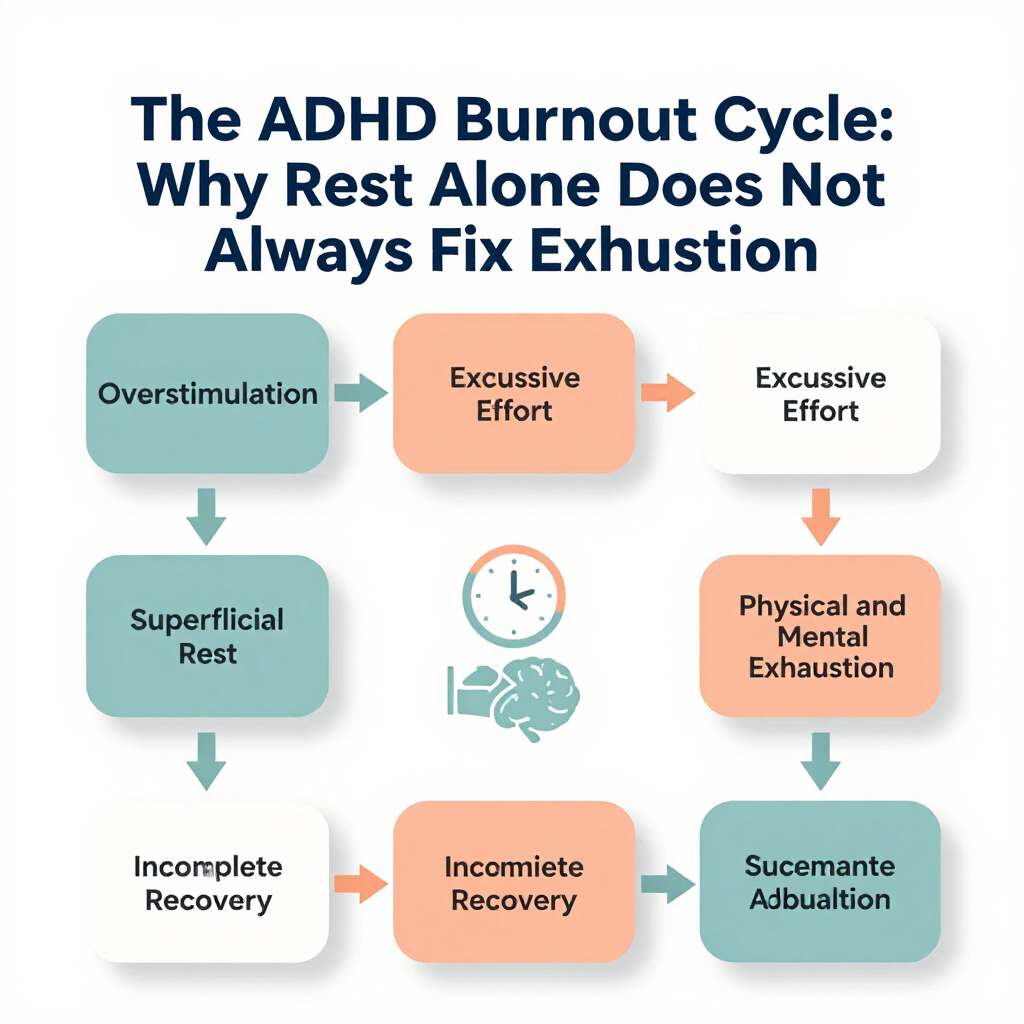
When an adult begins struggling at work, burnout is frequently the first explanation considered. Burnout can certainly play a significant role, especially when someone has spent years working harder than others to compensate for difficulties with focus and organization. However, treating burnout alone may not address the underlying pattern if executive functioning challenges existed long before the current workplace crisis. An individual may take time off, reduce their workload, or attempt to improve their sleep and still find themselves repeating the same frustrating patterns after returning to work. They might feel temporarily better but continue struggling to begin tasks, manage time, organize information, and maintain consistent productivity. At FocusDFW, we understand the importance of looking beyond surface-level explanations when persistent challenges continue affecting someone's professional and personal life.
Emotional Consequences Can Make the Situation Worse
Career difficulties rarely remain limited to work performance because they often affect confidence, relationships, and overall emotional well-being. Adults who do not understand why they struggle may blame themselves and develop deeply negative beliefs about their abilities. They may describe themselves as lazy, unreliable, careless, or incapable despite repeatedly trying harder to improve. Each forgotten meeting or missed deadline can reinforce feelings of shame and create anxiety about future mistakes. This emotional pressure can further impair concentration and make it even harder to approach demanding responsibilities. Over time, the combination of executive function difficulties and self-criticism can create a cycle where fear of failure makes productivity problems increasingly severe.
Some Careers Can Mask ADHD Better Than Others
The type of work someone performs can significantly influence when ADHD-related challenges become noticeable. Fast-paced, creative, highly stimulating careers may provide enough novelty and urgency to help an individual remain engaged. People may thrive in environments that reward quick thinking, problem-solving, creativity, and the ability to handle constantly changing situations. Difficulties can become more apparent when their role shifts toward administration, documentation, long-term planning, or repetitive tasks. A successful entrepreneur, salesperson, creative professional, or emergency worker may function exceptionally well in stimulating situations while struggling with routine organizational responsibilities. This inconsistency can be confusing because the person clearly demonstrates high levels of ability in certain areas while experiencing significant difficulty with tasks that others consider straightforward.
Remote Work Changed the Experience for Many Adults
The shift toward remote and hybrid work environments also caused some adults to recognize challenges that had previously been hidden by traditional workplace structures. Working in an office often provides natural routines, social accountability, scheduled meetings, and environmental cues that help organize the day. At home, employees may suddenly need to create their own structure while managing household distractions and fewer external boundaries. Without a commute or clearly defined work environment, difficulties with time awareness and task initiation may become more noticeable. Some individuals found themselves working irregular hours, constantly switching between tasks, or struggling to determine where to begin each day. These experiences led many adults to seek professional evaluations after realizing that conventional productivity advice was not solving their underlying difficulties.
ADHD Can Become More Difficult to Compensate for With Age
Many adults spend years developing elaborate systems to compensate for challenges they do not fully understand. They may use excessive reminders, work extremely long hours, arrive early to avoid being late, or repeatedly check their work because they fear making mistakes. These strategies can be effective for a period of time, but they often require enormous amounts of mental energy. As careers progress and personal responsibilities increase, maintaining these compensation systems can become exhausting. Marriage, parenting, leadership roles, financial responsibilities, and more demanding careers can collectively reduce the amount of energy available for constant self-management. What once looked like a manageable personality quirk can eventually become a significant obstacle to professional stability.
Why a Proper Evaluation Matters
Recognizing possible ADHD symptoms is not the same as receiving a diagnosis, which is why a comprehensive professional evaluation is important. Many other conditions and circumstances can contribute to difficulties with concentration, organization, motivation, and memory. A proper assessment considers an individual's history, current symptoms, functional challenges, and other factors that may influence attention and executive functioning. The goal should not simply be to attach a label to workplace struggles but to develop a clearer understanding of what is actually happening. Accurate insight can help individuals move away from years of self-blame and toward more appropriate support strategies. We believe that understanding the root cause of persistent challenges can be an important step toward creating meaningful and sustainable improvements.
Discovering ADHD Can Reframe an Entire Career Story
For many adults, discovering ADHD later in life changes the way they interpret their entire professional history. Past experiences that once seemed like unrelated failures can suddenly reveal a consistent pattern involving attention, organization, time management, impulsivity, or task initiation. The person may remember constantly losing important items, struggling to complete projects despite strong ideas, or needing extreme pressure to become productive. They may also recognize that periods of exceptional achievement and periods of complete overwhelm were not contradictions but part of a larger pattern. This realization does not erase the difficulties they experienced, but it can provide a more accurate framework for understanding them. Rather than viewing their career struggles as evidence that they were simply not capable, they can begin exploring strategies and support that better align with how they function.
Moving Forward With Greater Understanding
A career crisis can be deeply stressful, particularly when someone feels they are capable of more but cannot consistently demonstrate their potential. Yet for some adults, this difficult period becomes the catalyst that finally leads to answers they have been missing for years. Understanding ADHD can help explain why traditional productivity systems repeatedly failed despite sincere effort and determination. It can also encourage individuals to seek professional guidance rather than continuing to rely solely on self-criticism and overwork. With appropriate assessment and individualized support, adults can develop a clearer understanding of their challenges and identify strategies that better support their professional and personal goals. At FocusDFW, our approach recognizes that discovering the reason behind long-standing struggles can be the beginning of a more informed path forward rather than the end of a successful career.